
Search behavior doesn’t look the way it did even a few years ago.
People aren’t always typing anymore. They’re asking.
“Where’s the best coffee shop near me?”
“Find a dentist open now.”
“Call a plumber nearby.”
Sometimes it happens while driving. Sometimes, while cooking dinner. Sometimes, through a smartwatch or smart speaker sitting quietly in the living room.
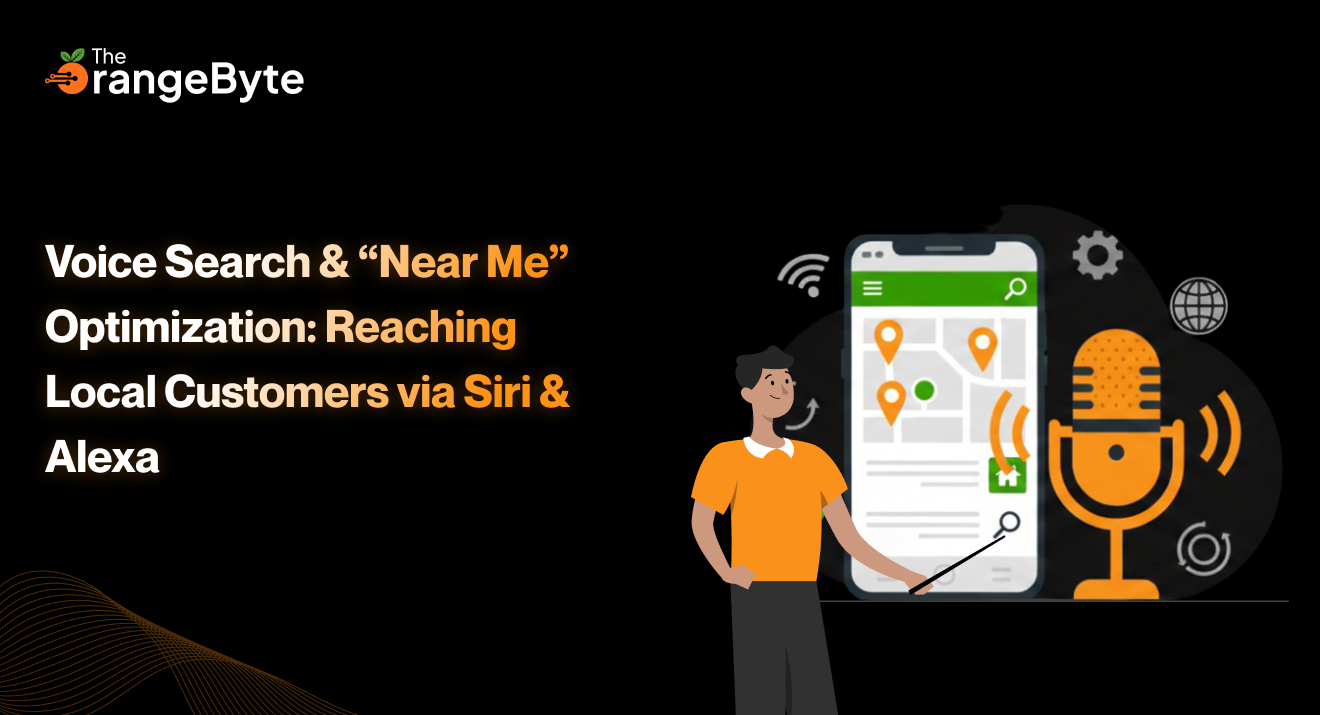
Voice assistants like Siri, Alexa, and Google Assistant have changed how local customers discover businesses, and for many companies, that shift is happening faster than expected.
For local brands, especially, voice search local SEO isn’t just another marketing trend. It’s becoming part of how customers decide who gets the call first.
Why “Near Me” Searches Matter More Than Ever
Local intent has always existed in search, but voice technology adds urgency.
When someone asks for a business “near me,” they’re rarely browsing casually. They’re usually ready to act.
They might want:
- Directions
- Availability
- Contact information
- or immediate help.
That’s why near me SEO optimization focuses less on broad visibility and more on being present at the exact moment someone needs you.
We’ve seen businesses invest heavily in websites or advertising while overlooking local discoverability. When voice assistants can’t confidently recommend a business, those opportunities disappear quietly.
Voice Search vs Traditional SEO: What Actually Changed
Traditional SEO largely focused on keywords people typed.
Voice search sounds different.
Typed search:
“roof repair Greenville.”
Voice search:
“Who fixes roof leaks near me right now?”
The difference isn’t small.
Voice queries are:
- Longer
- Conversational
- Question-driven.
A strong voice assistant SEO strategy understands intent rather than just keywords.
Instead of optimizing only for phrases, businesses now need content that answers real questions clearly.
That includes service explanations, FAQs, and location-focused information written in natural language.
How Siri, Alexa, and Google Assistant Choose Businesses
Many people assume voice assistants randomly pick businesses. They don’t.
Each assistant relies on structured data and trusted sources.
Google Assistant primarily uses:
- Google Business Profiles
- Maps data
- Website authority.
Siri pulls heavily from Apple Maps listings.
Alexa frequently relies on Bing integrations and directory partnerships.
That means consistency matters.
For effective Siri voice search optimization or Alexa local business search optimization, your business information must match everywhere, including name, address, phone number, hours, and categories.
Even small inconsistencies can reduce trust signals.
Conversational SEO and Question-Based Content
One of the biggest adjustments businesses make during voice optimization is changing how content is written.
Customers don’t ask assistants for keywords.
They ask questions.
Examples include:
- “Who installs windows near me?”
- “Which salon is open late?”
- “Where can I find emergency cleaning services?”
Pages that answer questions directly tend to perform better in voice results.
This doesn’t mean stuffing FAQs everywhere. It means writing naturally and clearly.
A thoughtful voice search marketing strategy focuses on helpful explanations rather than complicated language.
If a customer can understand your service instantly, voice assistants can too.
Local SEO Foundations Still Matter Most
Despite all the technology involved, strong basics still drive results.
Voice assistants prioritize businesses that demonstrate clear local authority.
That includes:
- Accurate listings
- Consistent citations
- Location-based service pages
- Relevant local content.
Many companies jump straight into advanced tactics without strengthening these fundamentals first.
That’s why local voice search SEO services often begin with auditing local presence before making bigger changes.
Voice search rewards clarity.
Google Business Profile and Local Listings
One surprising reality is how often voice answers come directly from listings rather than websites.
Assistants frequently pull answers from:
- Business hours
- Reviews
- Services listed
- Directions data.
If your profile isn’t updated, assistants may recommend competitors instead.
Regular updates matter:
- Fresh photos
- Accurate categories
- Service descriptions.
These signals help assistants confidently recommend your business when someone nearby asks for help.
Schema Markup and Featured Answers
Behind the scenes, structured data plays a major role.
Schema markup helps search engines understand what your business does.
Examples include:
- Service schema
- FAQ schema
- Review schema.
When implemented correctly, this increases the likelihood of appearing in featured answers, which voice assistants often read aloud.
A strong voice assistant SEO strategy treats structured data as part of development, not an afterthought.
Website Speed and Mobile Experience
Voice searches frequently happen on mobile devices.
If a website loads slowly or feels difficult to navigate, users rarely stay long.
Speed affects:
- User trust
- Engagement
- Rankings.
Fast-loading pages, clear navigation, and mobile responsiveness are no longer optional.
They’re expected.
Voice users want immediate answers. Businesses that provide them gain an advantage.
Reviews and Trust Signals Influence Recommendations
Voice assistants don’t just look for relevance.
They look for trust.
Businesses with strong reviews are far more likely to appear in recommendations.
Encouraging customer feedback and responding to it becomes part of SEO itself.
Reviews signal reliability both to algorithms and to customers listening to suggestions aloud.
Common Voice Search Mistakes Businesses Make
A few patterns show up repeatedly:
- Assuming traditional SEO automatically covers voice search
- Ignoring conversational queries
- Outdated business listings
- Slow mobile performance.
Voice search success rarely comes from one change.
It comes from alignment across website development, local SEO, and digital marketing strategy.
Preparing for a Voice-First Local Search Future
Voice technology continues evolving quickly.
Smart assistants are becoming more conversational and more predictive. Customers increasingly expect immediate answers instead of long research sessions.
Businesses investing early in voice search and local SEO build stronger visibility over time because assistants learn which sources are reliable.
The goal isn’t chasing technology.
It’s making it easier for customers to find you when they need you most.
Final Thoughts
Local discovery is becoming more conversational every year.
Customers ask questions. Assistants recommend answers.
When businesses invest in near me SEO optimization, conversational content, and accurate listings, they position themselves exactly where those conversations happen.
And in many cases, that moment when someone simply says, “Find a business near me” is where the next customer begins.
Ready to Make Your Business Easier to Find – Even by Voice?
Voice search and local SEO work best when strategy, website performance, and local visibility come together. At The OrangeByte, we help businesses build smarter digital foundations that attract customers at the exact moment they’re searching.